
- On November 18, 2026, three joint chambers of Poland’s Supreme Court adopted a resolution (ref. III CZP 41/26) on the effects of Constitutional Tribunal rulings. To answer questions on reopening civil proceedings, the Court first had to settle what a Tribunal ruling actually is.
- Only a decision issued by persons who, after being elected by the Sejm, Poland’s lower house of parliament, took the oath before the President of the Republic is a Tribunal ruling. Decisions involving those who “took the oath” in the Sejm – including Anna Korwin-Piotrowska – are not rulings and will not become rulings even if published in the Polish Journal of Laws.
- Genuine Tribunal rulings are binding regardless of publication, and petitions to reopen proceedings may be filed and examined before a ruling is published by the government. The Court thus refused to let the government’s unlawful inaction block citizens’ constitutional rights.
- The resolution may also prove significant for assessing the November 17 decision by which eight nominees of the ruling majority – five of whom never took the oath before the President – posing as the Tribunal’s General Assembly after the unlawful takeover of the Tribunal, consented to the prosecution of the Tribunal’s President and Vice-President.
On November 18, 2026, Poland’s Supreme Court, sitting as the joint Civil, Labor and Social Security, and Extraordinary Review and Public Affairs Chambers, adopted a resolution in case III CZP 41/26. It was issued at the request of the President of the Supreme Court presiding over the Civil Chamber. Although the resolution formally concerns the reopening of civil proceedings, its significance goes far beyond procedure: the Supreme Court expressly addressed the consequences of the government’s unlawful actions targeting the Constitutional Tribunal.
Control over the Tribunal was seized by persons most of whom never entered into the service relationship of a Tribunal judge
The resolution came at a critical moment. As we reported, on October 30, 2026, a group of persons elected as Constitutional Tribunal judges by the current parliamentary majority took over the Tribunal’s headquarters with the help of riot police and with the backing of the Polish government. Of the eight persons elected during the current term of the Sejm, only three – Magdalena Bentkowska, Dariusz Szostek, and Sławomir Patyra – took the oath before the President of the Republic. The others – Krystian Markiewicz, Marcin Dziurda, Maciej Taborowski, Anna Korwin-Piotrowska, and Maciej Berek – merely took an “oath” in the Sejm, which in Berek’s case was taken in the Speaker’s office.
The group is headed by Anna Korwin-Piotrowska, who – wholly unlawfully, as we demonstrated in detail in our legal opinion – presents herself as the judge acting in place of the President of the Constitutional Tribunal. Notably, the Supreme Court has already sided with the motion to treat her orders as legal non-acts. Meanwhile, on November 10, Prime Minister Donald Tusk published in Monitor Polski, Poland’s official gazette, the first resolution of the Tribunal’s “General Assembly” to be published in more than two years – an assembly convened by Korwin-Piotrowska herself – and proclaimed the beginning of a new era in which the government would publish the decisions of a Tribunal properly staffed at last.
Answering the question on reopening proceedings meant first answering a more fundamental one: what is a Constitutional Tribunal ruling?
In the meantime, the Supreme Court was asked whether a ruling of the Constitutional Tribunal binds public authorities – and permits reopening – before it is published in the official journal. The request concerned the government’s unlawful refusal to publish Constitutional Tribunal rulings. As the Supreme Court itself noted, since March 2024 the executive has been withholding publication in breach of the Constitution, so that 85 rulings are awaiting publication in the Journal of Laws alone – some of them in matters as important to citizens as pension calculations.
To rule on the effects of Tribunal rulings, however, the Supreme Court first had to settle a fundamental issue: what is – and what is not – a Tribunal ruling. Hence the first sentence of point one of the resolution:
A ruling of the Constitutional Tribunal is a decision issued in a case falling within its jurisdiction, following proceedings prescribed by law, by an adjudicating panel composed exclusively of persons who entered into the service relationship of a judge of the Constitutional Tribunal after being elected by the Sejm and taking the oath before the President of the Republic of Poland, that is, in his presence.
This thesis is no novelty – it is a straightforward consequence of the Act on the Status of Constitutional Tribunal Judges, under which a person elected to the Tribunal takes the oath before the President of the Republic, and the judge’s service relationship begins only once the oath has been taken. The resolution is also consistent with the line of case law that began with the Constitutional Tribunal’s judgment of December 3, 2015 (ref. K 34/15), in which the Tribunal held that:
The taking of the oath of office before the President of Poland […] is not merely a solemn ceremony that is symbolic in character and which represents a traditional way of commencing a term of office. […] These two significant aspects of the taking of the oath of office show that this is not merely a solemn ceremony but an event that brings about specific legal effects.
Whoever has not taken the oath before the President – despite having been elected by the Sejm – has not entered into the service relationship and therefore cannot perform the functions of a Constitutional Tribunal judge. Such a person cannot sit on the Tribunal’s panels; rulings issued with their participation must be treated as non-existent.
The clarification that the oath must be taken before the President, that is, in his presence, is equally noteworthy. It plainly rules out substitutes such as a notarial deed subsequently mailed to the President. What matters is not physical proximity but the active participation of the President as the one who receives the oath. Without that participation, there is simply no oath. As one of the judges rapporteur, Supreme Court Justice Prof. Aleksander Stępkowski, noted in the oral reasons for the resolution:
In extraordinary situations, one can imagine this being remote presence, through available means of communication.
Publication in the Journal of Laws does not determine whether a ruling is effective – either way
The second sentence of point one of the resolution goes to the heart of the dispute over unpublished rulings:
A ruling of the Constitutional Tribunal has the universally binding force referred to in Article 190(1) of the Constitution of the Republic of Poland regardless of its publication in the official journal.
In its reasons, the Supreme Court stressed that publication is not a constitutional condition for a ruling to acquire binding force; from the moment a ruling is announced, therefore, all authorities – the courts as well as administrative bodies – must refrain from applying a norm found unconstitutional. This is consistent with the position the Tribunal has taken for years and that ordinary courts have repeatedly confirmed.
Most important, however, is the caveat the Supreme Court made in this context – expressly in response to Donald Tusk’s plans, described by the Court as announcements of publishing in the official journal content that, under applicable law, cannot be regarded as Constitutional Tribunal rulings. The Court held that:
[…] the mere publication in the official journal of content that does not meet the conditions for being regarded as a ruling of the Constitutional Tribunal, as referred to in point one of the resolution, does not make it a ruling of the Constitutional Tribunal.
The resolution deserves full approval. Publishing official journals is a technical act, and it is the Prime Minister’s duty, not his prerogative: the Constitution requires Tribunal rulings to be published without delay, and under the statute it is the President of the Tribunal who orders their publication. The Tribunal itself recalled in its judgment of September 23, 2025 (ref. P 3/25) that a technical act cannot determine the validity of rulings.
The Supreme Court also stressed that this principle cuts both ways. Just as the unlawful failure to publish a ruling cannot deprive a validly issued judgment of its effect, publishing a decision issued by persons manifestly lacking authority will not turn it into a valid and effective ruling. In light of the Prime Minister’s announcement that, after two years of boycott, he intends to publish the decisions of Korwin-Piotrowska’s “Tribunal,” this is of key importance. The resolution has the force of a legal principle binding on all Supreme Court panels, so any lower court basing its decision on a “ruling” of the pseudo-Tribunal must reckon with being overturned on cassation. The resolution should therefore serve as a real safeguard against attempts to introduce such “rulings” into the legal order.
Citizens will not be held hostage to the government’s political games – the Supreme Court showed the courage the Supreme Administrative Court lacked
The Supreme Court made also important point, concerning reopening proceedings before a Tribunal ruling has been published. Polish civil procedure requires such a petition to be filed within three months of the ruling’s entry into force – a rule used as a pretext to reject citizens’ petitions as “premature” because the government had not published the ruling. The Supreme Court put an end to that practice:
A petition to reopen proceedings under Article 401¹ of the Code of Civil Procedure may be examined on the merits before the ruling of the Constitutional Tribunal is published in the official journal; the time limit referred to in Article 407 § 2, first sentence, of the Code of Civil Procedure expires only three months after that publication.
Government obstruction will thus not shorten the time citizens have to act: by refusing to publish a ruling, the government merely extends the period in which citizens may seek to reopen their cases. This is a very valuable outcome for citizens, whose rights – such as the right to have a pension recalculated – can no longer be blocked by the government’s political games.
It is all the more regrettable that Poland’s Supreme Administrative Court (NSA) did not show similar courage. On October 26, 2026, a seven-judge panel of the NSA (ref. III FPS 2/26) formally left the question unanswered but held in its oral reasons that before publication a Tribunal ruling does not acquire normative effectiveness and therefore cannot be grounds for reopening administrative court proceedings. As a result, a citizen whose case is before an administrative court is today clearly worse off than one whose case is pending before an ordinary court – even though the Constitution guarantees both of them the right to have proceedings reopened.
The Supreme Court’s resolution and the kangaroo-court session on the immunity of the Tribunal’s President and Vice-President
Although the resolution concerns Tribunal rulings rather than resolutions of its General Assembly, its ratio reaches further and may be relevant for assessing the recent actions of the pseudo-Tribunal led by Anna Korwin-Piotrowska.
In any event, even without the resolution the matter should be obvious: the Act on the Organization and Procedure of the Constitutional Tribunal expressly provides that the General Assembly consists of serving Tribunal judges who have taken the oath before the President of the Republic, and it is that body that may consent to a Tribunal judge being held criminally liable. Persons who have not taken the oath before the President are not members of the General Assembly – and cannot strip anyone of immunity. This bears directly on the events of November 17, 2026.
On that day, eight nominees of the current majority, sitting as a “General Assembly,” consented to criminal proceedings against Constitutional Tribunal President Bogdan Święczkowski (in four cases) and Vice-President Bartłomiej Sochański (in one), suspending them from their duties and cutting their salaries by 50 and 25 percent respectively. The entire procedure disregarded the most elementary requirements of the right of defense. As attorney Michał Skwarzyński warned on November 13, defense counsel had not received the motions to lift immunity, which ran to over three hundred pages; they were still not served by the day of the session, and the “Assembly” – as attorney Bartosz Lewandowski reported – held that service of the motions was irrelevant to the proceedings. The judges’ right to give explanations thus became illusory. The media were barred from the room, as was Judge Piotr Schab, who was to defend Vice-President Sochański.
Moreover, consent to prosecution for preventing properly elected judges of the Constitutional Tribunal from adjudicating was given by the very persons allegedly prevented from adjudicating – five of the eight voting members: Anna Korwin-Piotrowska, Krystian Markiewicz, Marcin Dziurda, Maciej Taborowski, and Maciej Berek. Berek also took part in deciding on consent to prosecute the Tribunal’s President for allegedly violating the bodily integrity… of Maciej Berek himself. It is hard to imagine a more flagrant violation of the principle nemo iudex in causa sua – no one may be a judge in his own case – under which, in criminal procedure, a judge is excluded by operation of law whenever a case concerns him directly. Święczkowski had expressly demanded their recusal.
Finally, in the course of the session, the meeting of a Constitutional Tribunal body was moved to the building of the Regional Court in Warsaw. As the court’s spokesperson confirmed, Korwin-Piotrowska had asked for a courtroom, and the court’s president agreed. That is hardly a coincidence: the court is headed by Beata Najjar, who – as we reported – remains in office despite having retired, solely because the Minister of Justice usurped the powers of the National Council of the Judiciary. The majority’s nominees were evidently terrified that the Tribunal’s President and Vice-President would enter the Tribunal building – hence a maneuver of doubtful legality, as the Tribunal’s rules make no provision for sessions held outside its seat.
The charges concerning the exclusion of the new judges from adjudication are, moreover, utterly absurd. It is rather admitting persons who had not taken the oath before the President to adjudicate that would constitute an offense, not the opposite. Even if that were not so, attributing any blame to the Vice-President is particularly baseless, since the law entrusts the assignment of cases to the President of the Tribunal. The action against him looks like a pseudo-legal ploy: normally, if the President could not perform his duties, the Vice-President would stand in for him, and the most senior judge could step in only if the Vice-President could not. Without “suspending” the Vice-President, Korwin-Piotrowska could not even feign a legal basis for taking over the Tribunal – yet another argument that all her orders are unlawful.
The only gesture of independence the eight showed toward the prosecutors was their refusal to consent to the arrest and pretrial detention of the Tribunal’s President. This does not, however, alter the illegality of the entire affair, as stressed by defense counsel for the President and Vice-President, while Święczkowski himself put it succinctly: since there was no General Assembly, no resolutions were adopted. In light of the statute governing the Tribunal, it is hard to disagree.
Conclusion
It is encouraging that the Supreme Court – unlike the NSA – rose to the occasion. The resolution protects citizens from the government’s unlawful obstruction while barring attempts to legitimize decisions of those who seized the Tribunal with police help. A Constitutional Tribunal ruling is a ruling issued by Constitutional Tribunal judges – and only a person who, after being elected by the Sejm, has taken the oath before the President of the Republic is a Constitutional Tribunal judge. Neither non-publication nor publication on political demand will change that.
The divergence between the Supreme Court and the NSA shows, however, that the proposals the Ordo Iuris Institute set out in its report on ending the rule-of-law crisis remain relevant. First, the legislature should suspend the running of maximum time limits for reopening proceedings until Tribunal rulings are published – the resolution does not affect the ten-year limit in civil procedure, and administrative cases remain subject to the NSA’s approach. Second, the Tribunal – and other bodies whose acts must be published – should be able to publish directly in the Journal of Laws and Monitor Polski, without going through the Government Legislation Center. As long as the publication of a constitutional body’s acts depends on the Prime Minister’s political will, citizens’ rights will remain hostage to day-to-day politics.
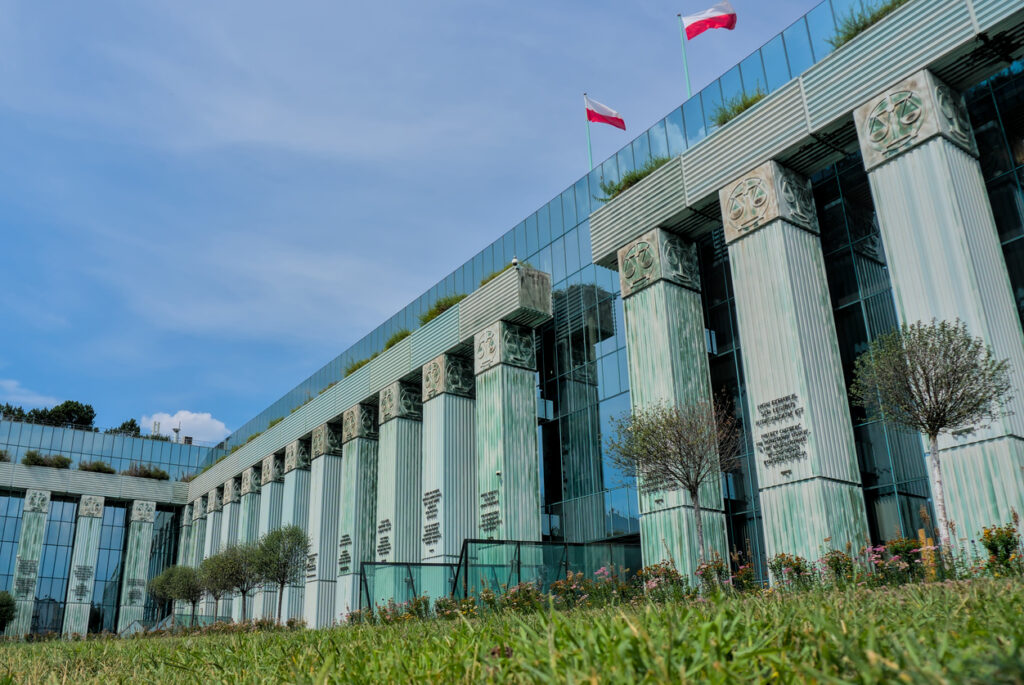
Source of cover photo: iStock.
